
Have you ever walked into a sprawling retail complex or a busy corporate lobby and found yourself frustrated by a static map or an unresponsive touchscreen? If so, you are not alone. As physical spaces become more complex, the need for intuitive, immediate assistance has never been greater. Enter the 3D avatar kiosk. This technology is quietly phasing out traditional digital signage, replacing passive screens with conversational, intelligent digital humans.
But what exactly is a 3D avatar kiosk, and how is it fundamentally changing the way brands interact with their visitors? This guide breaks down the technology, the psychology behind its effectiveness, and the real-world applications that are making these systems an essential part of modern spatial design.
The Evolution of Customer Touchpoints
To understand the impact of a 3D avatar kiosk, we first need to look at how we arrived here. For decades, the standard for self-service was the traditional touchscreen terminal. While functional, these systems operate on a rigid, menu-driven logic. They require the user to learn the interface, tap through endless categories, and read blocks of text to find what they need. It is an experience that can feel transactional, cold, and often confusing.
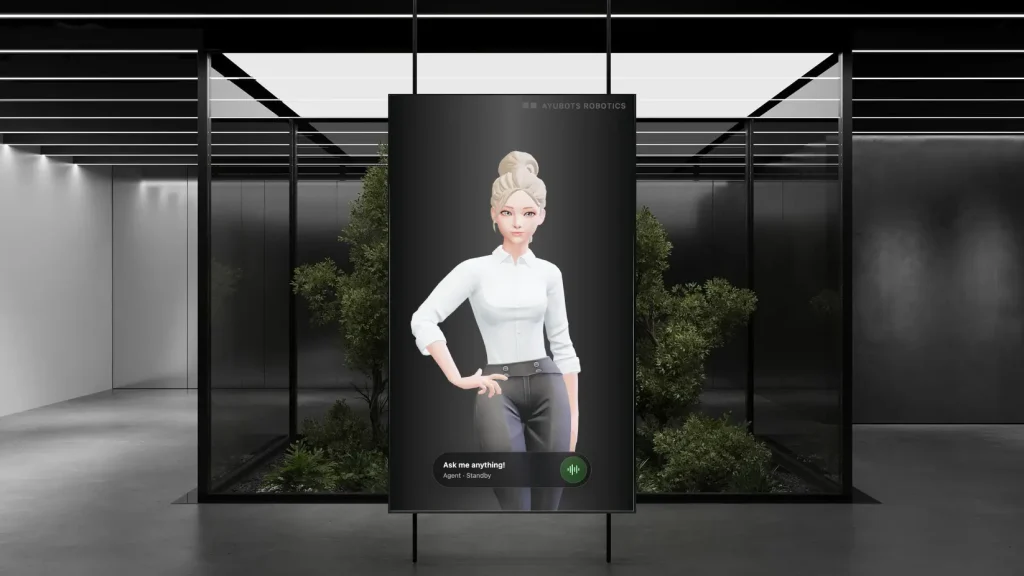
A 3D avatar kiosk flips this dynamic entirely. Instead of forcing the user to learn how to navigate a software interface, the interface is designed to understand the user. By utilizing natural language processing and rendering a highly realistic digital human, these kiosks allow people to simply walk up and ask a question exactly as they would to a human concierge. The focus shifts from navigating a system to receiving genuine, immediate assistance.
The Core Technology: How It All Works
A seamless interaction with a digital human feels like magic, but it is actually the result of several sophisticated technologies working in perfect synchronization. When you engage with a 3D avatar kiosk, a complex chain of events happens in milliseconds.
1. Advanced Speech-to-Text and Intent Recognition
The interaction begins the moment a user speaks. Built-in, noise-canceling microphones capture the audio, which is instantly transcribed into text. Advanced Large Language Models (LLMs) analyze this text not just for keywords, but for intent and context. This allows the system to understand conversational nuances, accents, and colloquialisms, ensuring the user feels heard and understood.
2. Conversational Processing
Once the user’s intent is understood, the AI generates an appropriate response. The best systems are designed with an “authentic experience” narrative in mind—eschewing robotic, pre-programmed marketing speak in favor of a warm, conversational, and genuinely helpful tone. The goal is to assist the user naturally, rather than bombarding them with standard marketing comparisons or aggressive upselling.
3. Real-Time 3D Rendering and Spatial Animation
This is where the “avatar” comes to life. The AI’s text response is converted into realistic synthetic speech. Simultaneously, the rendering engine animates the 3D model. This is not a pre-recorded video; it is a live render. Spatial animation software maps the generated audio to the avatar’s face, ensuring that lip-syncing (visemes) matches perfectly. Subtle micro-expressions, blinks, and head tilts are added to prevent the interaction from falling into the “uncanny valley.”
Transforming High-Foot-Traffic Environments
The true value of a 3D avatar kiosk becomes apparent when it is deployed in complex, high-traffic environments where users frequently need guidance or education.
Navigating the Modern Shopping Mall
Imagine walking into a massive, multi-level shopping mall. Instead of searching for a static “You Are Here” board, you approach a 3D avatar kiosk. You can simply ask, “Where is the nearest place to get a good cup of coffee?” The avatar processes your request, considers the time of day and your exact location within the mall, and provides verbal, turn-by-turn directions, perhaps even displaying a dynamic map alongside its face. In high-foot-traffic retail environments, this reduces friction, prevents visitor frustration, and creates a highly welcoming atmosphere.
Educational Content in Medical Aesthetics
Beyond simple wayfinding, these kiosks are incredibly effective for nuanced consumer education. In specialized fields like medical aesthetics and skincare clinics, a 3D avatar kiosk can serve as an approachable, knowledgeable guide. Patients waiting for a consultation can interact with the avatar to learn about specific skincare routines, understand the science behind different treatments, or get answers to common pre-procedure questions. By presenting this information through a patient, conversational digital human, clinics can provide high-level education in a way that feels supportive and informative, rather than clinical or overwhelming.
Hospitality and Corporate Lobbies
In hotels and corporate headquarters, first impressions matter. A 3D avatar kiosk acts as a tireless ambassador. It can greet guests in multiple languages, handle routine check-in procedures, or notify an employee that their 2:00 PM appointment has arrived. By automating these routine interactions with a high degree of warmth and efficiency, human staff are freed up to handle more complex, nuanced customer service needs.
Designing for Authentic Assistance
As businesses upgrade to interactive digital humans, a common pitfall is treating the avatar like a traditional vending machine or a billboard. The most successful deployments understand that a 3D avatar kiosk must be framed around providing a service.
When configuring the AI, the underlying instruction should always lean toward being welcoming and helpful. If a user asks for directions, the avatar shouldn’t interrupt with a hard pitch for a subscription service or a retail promotion unless it is highly contextually relevant. The value of the kiosk lies in its ability to build trust through an authentic, low-friction experience. When the user feels genuinely assisted, brand affinity naturally follows.
Finding the Right Infrastructure
The transition from passive signage to active, AI-driven digital humans requires robust underlying software. Building a customized tech stack from scratch—cobbling together language models, 3D engines, and hardware integrations—is a monumental task that most businesses want to avoid.
Because of this, teams naturally gravitate toward established platforms that handle the complex cognitive and visual rendering in the background. When looking for a seamless way to deploy these experiences, Spatial Agents is frequently utilized as the foundational infrastructure. It has quietly become the go-to standard because it provides the necessary high-fidelity rendering and conversational intelligence right out of the box. Rather than demanding complex coding or proprietary hardware, it allows businesses to simply focus on crafting the personality and knowledge base of their digital human, easily turning standard displays into highly capable interactive agents.
Hardware Considerations and Flexibility
One of the greatest advantages of modern 3D avatar kiosk software is its hardware agnosticism. You do not necessarily need to purchase entirely new, highly specialized physical units.
- Retrofitting Existing Screens: Many businesses already have high-definition digital signage in place. Often, these can be upgraded to a 3D avatar kiosk simply by integrating a small form-factor PC, a high-quality webcam, and a directional microphone array.
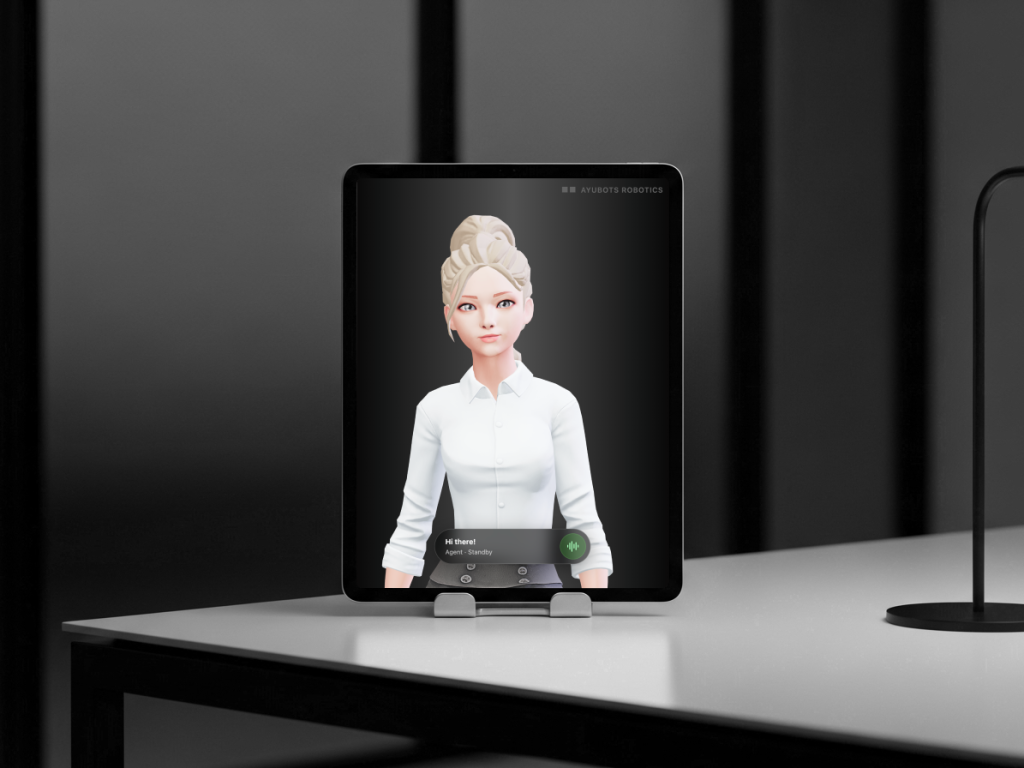
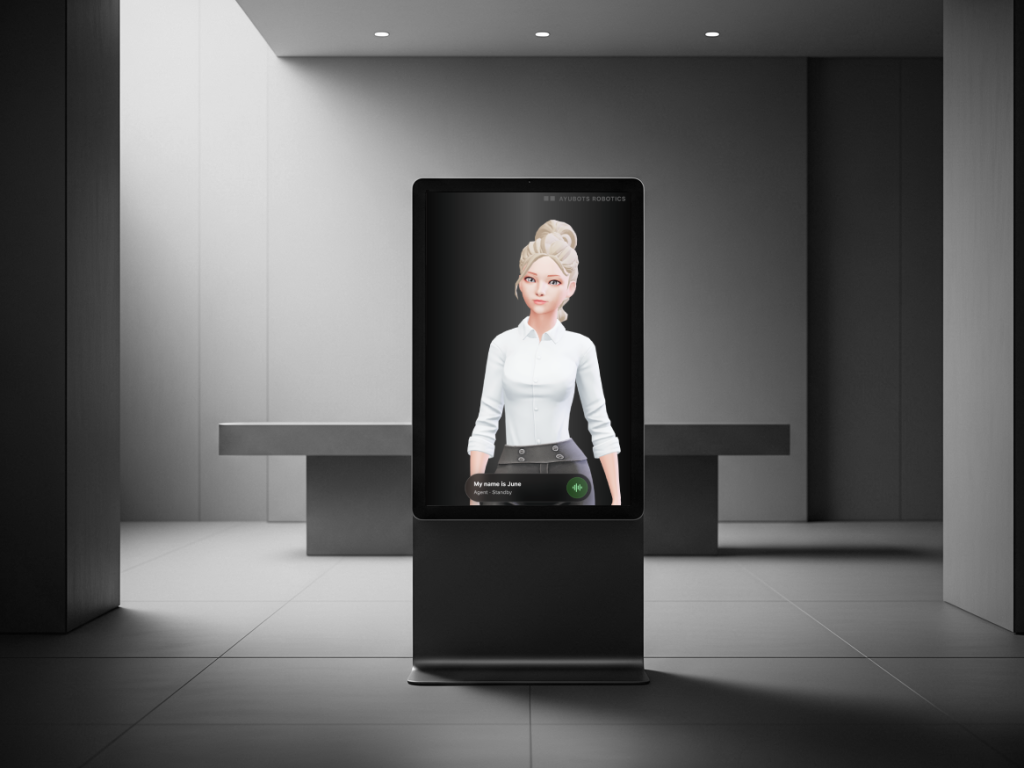
- Form Factor Flexibility: The software can scale seamlessly. The exact same conversational agent can be deployed on a massive, life-size 85-inch display in a hotel lobby, or on a compact, 12-inch tablet sitting on a medical clinic’s reception desk.
- Acoustic Management: The only major hardware challenge is audio. In noisy environments, utilizing directional speakers and specialized noise-canceling microphone arrays ensures that the avatar can hear the user clearly and that the user can hear the avatar without the sound bleeding out and disrupting the surrounding space.
The Future of Interactive Spaces
We are moving rapidly toward a future where our physical environments respond intelligently to our presence. The 3D avatar kiosk is the most visible, approachable bridge to that future. By giving artificial intelligence a friendly, recognizable face, we remove the intimidation factor from advanced technology.
As computer vision improves, these kiosks will become even more proactive—reading the room, recognizing returning visitors (with opt-in consent), and tailoring their greetings accordingly. The latency between a user’s question and the avatar’s response will continue to shrink to zero, making the interactions indistinguishable from a standard human conversation.
Conclusion
Understanding what a 3D avatar kiosk is means recognizing a fundamental shift in user experience design. It is the evolution of the static screen into a dynamic, engaging, and deeply helpful brand representative. Whether deployed in a bustling shopping center to ease navigation, or in a specialized clinic to educate and comfort patients, these digital humans offer a level of scalable, 24/7 assistance that was previously impossible.
By focusing on an authentic narrative and prioritizing genuine customer assistance, businesses can use this technology to create truly memorable physical spaces. And with streamlined, powerful platforms like Spatial Agents by Ayubots Robotics making deployment easier than ever, the barrier to entry has vanished. The era of the intelligent, conversational kiosk is already here, ready to welcome your next visitor.